Monday, 9 April 2018

Lincoln in the Bardo - why I don't like experiments


Rarely does a book let me down - particularly if I'm inspired by the first few pages. So let's talk about those pages first. It didn't seem as if I was reading the book; I was watching it. And watching something deeply personal without the protagonist's consent. There was a strange, voyeuristic sensation attached to my progress in the book. I remember thinking that words here have a life of their own - sentences and paragraphs just saunter in or march out as and when they please, instead of beig governed by a central narrative or plot. But again, those were just for the first few pages. I picked up a novel and I novel I expected. If I wanted an experimental crafting of words with zero sense of style, I would have gone to Terribly Tiny Tales or some such initiatives that the internet is peppered with these days; anyone can be a writer, apparently.

I now realize that I am struggling to create content for reviewing this book and that's basically because the book doesn't have much for me take away. Saunders must be a genius, no doubt. Because to write like this deliberately does take talent. I was genuinely wowed at a few places but the 'voices' and the ghosts were just too much to take. What critics call alternative storytelling sums up to no plot and no character development essentially. So if you're one of those who like getting lost in a book, to be never found again, go for it. As for me, no more avant-gardism, no more experimentation.
Monday, 26 March 2018

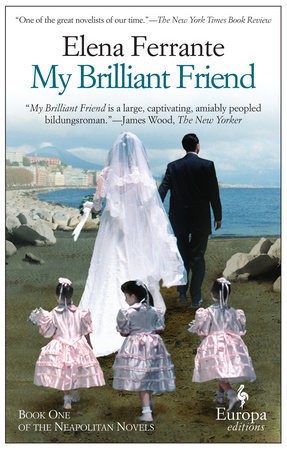
My Brilliant Friend - a truly Brilliant read


Image result for my brilliant friendIn a world where everyone is fiercely manufacturing opinions, coming across a book that lets you build your opinions is refreshing indeed. This absence of explicitly stated opinions comes from the deftly tempered storytelling by Miss Ferrante - adding poignancy and nuance without the need for resorting to extreme representations of misery, life or the human condition. And this temperance is what makes both Elena and Lila so relate-able, even though they are cohabitants of a different culture, of a different country, of a different century.It's easy to draw a men versus women boundary when a text just wants to focus on the 'female experience' but Miss Ferrante doesn't seem to like the easy stuff. While the insecurities, the and the class struggles that both girls experience are universal, humanitarian themes, their rendition of it in words is uniquely feminine. Their friendship and their viciousness is a complete plot unto itself that weaves together other tropes and characters while it drunkenly makes its way to the end.

I say drunkenly because there is no structured-writing tenet that Miss Ferrante wants to respect. Different aspects of the plot unfold as and when she remembers them. Characters are introduced and removed for no seeming rhyme or reason. She just lets the momentum build using the urgency of the story she wants to convey. And that is the fundamental beauty of My Brilliant Friend. There is no write-100-words-then-refine-them-to-ten strategy going on here. It's just simple writing - with no fanfare, stripped to its bones.

This review would not be complete without touching on the climax or rather, lack of it. The book doesn't end with a deliberate action - a propensity that is quintessentially Lila - but ends with just a simple observation. It's empty, it's abrupt and it's not connected to the crucial bit of information that the book starts with. But all of it just somehow comes together, courtesy of the unique storytelling.

My Brilliant Friend is not just a book on the female experience, but on human experience - experiences that are not manufactured in a writers' workshop but crafted by the book's characters.