Monday, 9 April 2018

Lincoln in the Bardo - why I don't like experiments


Rarely does a book let me down - particularly if I'm inspired by the first few pages. So let's talk about those pages first. It didn't seem as if I was reading the book; I was watching it. And watching something deeply personal without the protagonist's consent. There was a strange, voyeuristic sensation attached to my progress in the book. I remember thinking that words here have a life of their own - sentences and paragraphs just saunter in or march out as and when they please, instead of beig governed by a central narrative or plot. But again, those were just for the first few pages. I picked up a novel and I novel I expected. If I wanted an experimental crafting of words with zero sense of style, I would have gone to Terribly Tiny Tales or some such initiatives that the internet is peppered with these days; anyone can be a writer, apparently.

I now realize that I am struggling to create content for reviewing this book and that's basically because the book doesn't have much for me take away. Saunders must be a genius, no doubt. Because to write like this deliberately does take talent. I was genuinely wowed at a few places but the 'voices' and the ghosts were just too much to take. What critics call alternative storytelling sums up to no plot and no character development essentially. So if you're one of those who like getting lost in a book, to be never found again, go for it. As for me, no more avant-gardism, no more experimentation.

Monday, 26 March 2018

My Brilliant Friend - a truly Brilliant read


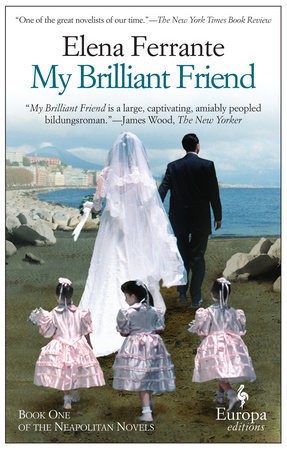
Image result for my brilliant friendIn a world where everyone is fiercely manufacturing opinions, coming across a book that lets you build your opinions is refreshing indeed. This absence of explicitly stated opinions comes from the deftly tempered storytelling by Miss Ferrante - adding poignancy and nuance without the need for resorting to extreme representations of misery, life or the human condition. And this temperance is what makes both Elena and Lila so relate-able, even though they are cohabitants of a different culture, of a different country, of a different century.It's easy to draw a men versus women boundary when a text just wants to focus on the 'female experience' but Miss Ferrante doesn't seem to like the easy stuff. While the insecurities, the and the class struggles that both girls experience are universal, humanitarian themes, their rendition of it in words is uniquely feminine. Their friendship and their viciousness is a complete plot unto itself that weaves together other tropes and characters while it drunkenly makes its way to the end.

I say drunkenly because there is no structured-writing tenet that Miss Ferrante wants to respect. Different aspects of the plot unfold as and when she remembers them. Characters are introduced and removed for no seeming rhyme or reason. She just lets the momentum build using the urgency of the story she wants to convey. And that is the fundamental beauty of My Brilliant Friend. There is no write-100-words-then-refine-them-to-ten strategy going on here. It's just simple writing - with no fanfare, stripped to its bones.

This review would not be complete without touching on the climax or rather, lack of it. The book doesn't end with a deliberate action - a propensity that is quintessentially Lila - but ends with just a simple observation. It's empty, it's abrupt and it's not connected to the crucial bit of information that the book starts with. But all of it just somehow comes together, courtesy of the unique storytelling.

My Brilliant Friend is not just a book on the female experience, but on human experience - experiences that are not manufactured in a writers' workshop but crafted by the book's characters.

Sunday, 30 July 2017

One Hundred Years of Solitude and the futility of human enterprise

Highly recommended by every single person who's read Gabriel Garcia Marquez, this piece of surreal literature is undoubtedly so worth your time if you ever decide to pick it up. Usually when I start to write out a review about any book it is either something that I have a lot to say about or it is something that has blown my mind. This book is neither. Neither is it something that I can't stop gushing over nor is it something that I have a firm constructed opinion on. But this is one book that has made me feel too much. It's something that has made me connect with 'it' and not with its characters. Never have I felt something moving for a book without feeling something for its character(s). Maybe it was the frame of my own head when I picked up this book, maybe it was my early quarter-life existence creating an enigmatic mesh to create meaning where there really was no deep meaning. Whatever it was, there's no denying that I plummeted into a deep dark unknown and didn't know how to crawl back for quite sometime; before my natural upbeatness (not sure if that's a legit word) turned things upright for me. And thank goodness for that!

One Hundred Years of Solitude circles around generations of Buendía family - like a flying predator eyeing its land bound prey, sometimes upclose with the magnified precision that only physical proximity can bring and sometimes with the hazy obscurity of distance. I say circle because, man, circle it does. It's the same frigging mistakes, the same fate brought about these mistakes, over and over again. Through all the familiar themes of love, longing, jealousy, revenge, Marquez makes one theme abundantly clear - that it will end where it all started, that it will eventually come full circle. It has to, it's the natural order of things. I won't talk about the plot much because really there's nothing much to it anyway. I will instead talk about how this book made me feel, the myriad of emotions that cushioned my fall from my surrounding reality into this realm where both the rational and the fantastical could exist in relentless harmony. A realm where garish radiance is dull but unadorned monochrome is blinding, where jarring cacophony is soothing but pure silence is deafening. Yes, it's that kind of a book - fills your head with all sorts of ideas and then makes you cripplingly uncomfortable with your own thoughts. You wonder why you get up at sun-up and snore at sun-down, you wonder why you need to make the trudge to your routine job everyday when you can survive even without it, you wonder with eyes wide open in the middle of the day and you wonder in the deepest recess of slumber, you wonder and wonder and just continue wondering till you either snap from the pressure of it or you learn to be comfortable with your thoughts, all by yourself.

More than the wonder, it's the doubtful color with which it paints everything you had so far taken for granted that is unnerving. The fatal destiny of each Buendía, the continuous struggle against this destiny and the premonition which Marquez builds in your head foreshadowing the futility of this struggle will either unhinge you or make you better equipped to handle Solitude. Let's hope it's the latter. 

Thursday, 7 January 2016

When William Came: Where Aldous Huxley meets Oscar Wilde


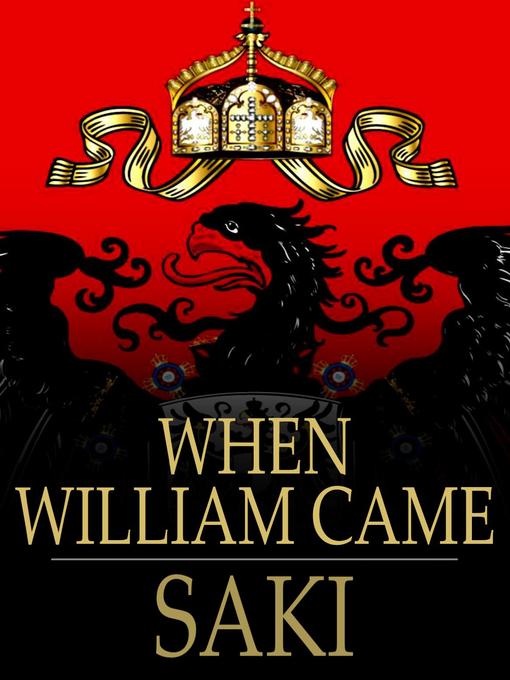
When I picked this book up, my expectation was to find another character along the lines of Reginald or Clovis, another character to love for his witticism and stinging rejoinders, another character to admire for his dandiness, another character to take me through tales of the British drawing room. The obvious suspect for such a character was Ronnie Storr, a regular dandy like Reginald and Clovis, introduced as a charming young thing with a penchant for traipsing among British aristocrats. I waited for him to demonstrate his Reggie-like subtle, wry humor or his Clovis-like delectable mischief but I kept waiting in vain. For this book, as I later learned, was not intended to be a funny, satirical take on British aristocracy but a commentary on compulsory military service.

The book is futuristic saga chronicling life in England under a German rule. If Oscar Wilde had been the original author of A Brave New World, this is what he would have produced. A futuristic tale is not what I would pick up a Saki for (we have enough of those anyway) and, hence, the plot was jarring at first. But if you let go of that initial note of discomfort, the rest of the melody is easy to get through, for the first half anyway. It is peppered with jocular and sardonic analogies in a style that is intrinsically Saki. But even that wasn’t enough to save the lackluster plot and I was left wanting by the end of it. The first half was breezy enough but I kept hoping for the humor to improve, as it usually does in his short stories, or for things to take a macabre turn (like what happened in The Unbearable Bassington) but the novel became a drag with time. Sentences were long and lacked the Saki humor to carry you through their length and I was drifting in and out on multiple occasions.

Nevertheless, I believe it was a decent if half-baked attempt at a fantasy novel, primarily because Saki’s analogies are pure gold, even if they were scarce.

P.S. Plus one to Saki for his cognizance of a tiny town in India called Allahabad. My judgment is not biased here, I swear.

Thursday, 28 May 2015

Tripping on Ulysses

Ulysses has been on my reading list since I finished reading Portrait of the Artist as a Young Man by James Joyce, especially because I found Portrait to be a vitally refreshing read. I finally found time for this book which has been endorsed as "the most prominent landmark in modernist literature" and now I know why it's considered such a challenge and why it can leave a lasting impact on people's lives. Well, if you were trying to make sense out of a seemingly nonsensical and endless array of diverse knowledge systems, it would definitely have an impact, at least on the heretofore untarnished state of your mental health if not your life. It's been 15 days since I started reading this book and I'm still miles away from finishing it. I've now begun to wonder if Ulysses is going to join Emma as the second book in the list of books I've deserted reading midway.
It is not the technique that I have difficulty grappling with, it's the infinite layers of references that each sentence, each phrase seems to be extravagantly encrusted with. Irish history, world history, Shakespeare, Greek mythology, Irish mythology, you name it, Joyce has referenced it. There is a limit to how many terms and names one wikis while still on the same goddamn page. Gah!

While it's understandable how this book is considered revolutionary in its style and approach to writing, but sometimes it looks like Joyce is trying too hard. You almost want to shout at him, "Yes, Joyce, we have figured out you are a genius. Can you please stop showing off like a strutting peacock, now?" There are pages that are full of only names. That's it, just names! And I kid you not, in each of these pages I've always forgotten what the list of names is signifying in the book, even though I was fully conscious of the significance before I started reading the names. I mean, why in the name of all things worth reading, would anyone want to go through two full pages that consist of just names.

Apart from the copious amount of background knowledge, I would remember Ulysses as that book that I read on a train journey, while high and "dopey". I had waited for a full hour (which felt like at least six hours because of...erm..you know..) for my train to arrive, battling 40+ degree Celsius temperature and an annoying stranger who would keep standing uncomfortably close to me even though I was continuously moving around in my silent vigil for the train. Needless to say I was veritably peeved by the time I settled into my seat. And then this family with a three year old kid settles around me. Not a very auspicious start to my journey (I hate kids, absolutely and thoroughly). It hadn't been a quarter of an hour from the commencement of my journey when this kid, like every single one of his infernal species, started up a raucous racket. All because he wanted some ice-cream and wanted it right then, on a friggin' moving train. Kids, sigh... Neither his mother's pampering nor his father's glaring could pacify the pest. Well, I had a weapon of my own. I released a volley of verbal reproaches, to the astonishment of the indignant parents. But hey, the kid didn't make a sound for a few hours after that; offended parents is an insignificant price to be paid for that kind of bliss. And right after such an adventurous start to my journey, I began tackling Ulysses. Aaaand I stumble across this passage, "..the father who has not a son be not a father can the son who has not a father be a son? When Rutlandbaconsouthamptonshakespeare or another poet of the same name in the comedy of errors wrote Hamlet he was not the father of his own son merely but, being no more a son, he was and felt himself the father of all his race, the father of his own grandfather, the father of his unborn grandson who, by the same token, never was born, for nature, as Mr Magee understands her, abhors perfection." I was nonplussed for a moment before I broke into giggles of inconsolable mirth, again to the wide-eyed astonishment of the family around me. And this continued for the entire span of my journey, by which time the unfortunate family was convinced that I had a serious mental problem.

Honestly, the book does have its merits. There were times when it amused me and wowed me even though I was completely sober. But for that to happen, I need to get the effing references, and that was a rare phenomenon. And in my opinion, if you bore someone with an interminable monologue on some obscure Irish custom and slip a joke in between, the joke is bound to precipitate more hilarity than it deserves. Sheer genius, Mr. Joyce!

Ulysses is not the first classic that I've read. I love classics, I adore classics but in assessing Ulysses I will side with Virginia Wolf's judgement that "Ulysses was a memorable catastrophe—immense in daring, terrific in disaster." Because when I want to read a book, I would rather read a book, not an encyclopaedia. If that makes me a literary n00b, then so be it. If that makes me one of T.S. Eliot's "uneducated and undisciplined coxcombs", then so be it; and James Joyce can go fuck himself.

Friday, 6 February 2015

Fahreheit 451

Fahrenheit 451 is one of those books that have been on my to-read list since forever. So many reviewers, so many lists ardently advocate its merit. But frankly, I would have to disagree with their fervent endorsement of this book that falls woefully short of its reputation. Written in a futuristic setting, the primary, and to the best of my reading ability, the only idea in Farhenheit 451 is censorship- a revolutionary idea that cemented the novel's place in the canon of dystopian novels.

The novel starts off in a promising style but never manages to build up on it. It pivots on its central character, Guy Montag, who is a fireman- somebody whose duty involves burning houses that harbour books in that time, for it is a time where reading books is a crime.  Montag is married to a television (television is a rather simplified term for the humongous gadget that the novel talks about) addict who has to swallow fistfuls of sleeping pills to be able to sleep at night. And the world is full of men and women exactly like Mildred, Montag's wife. All in all, it makes for an invigorating sci-fi setting that the novel uses solely as a prop and therein lies my actual problem with the novel. 

Bradbury's overt ideology manages to methodically mask the depth the characters could have achieved and dampen the feeble sparks of ideas that could have been ignited into a full-fledged flame of alternate narratives. I don't have an issue with his theoretical agenda, I really don't. What exceedingly exasperates me is the fact that the characters and the sci-fi aspect of the novel have been callously martyred to fuel this agenda. The fictional world, for example, needs more detail than it has been furnished with. I would have, personally, liked to know how Mildred's 'family' functions. Why is it that she is required to participate in the drama too? Are the shows just one big reality-tv show? And what about the gadgets that the firemen carry? No detailing over there, either. Beatty, Clarise - both propitious characters- but prematurely terminated in my opinion. A bit of background into both characters would have been nice. It could have been such a brilliant sc-fi novel. It could have been a novel where characters didn't lack intensity. Heck, it could have been both and still retained Bradbury's agenda.

The entire novel can be summarized in two simple sentences. Censorship is evil. The world will die because of it. Overall, the novel could have been better if not for its parochial vision and crippling ideology. Both, the narrative and the characters come out as uni-dimensional for lack of attention. The novel disappoints because Bradbury fails to marry the sci-fi setting with his ideological agenda and refuses to let any other idea gain even a semblance of prominence.

Wednesday, 28 January 2015

Louder & Funnier


Being a huge P.G. Wodehouse fan, I picked this book up last week and was surprised to find out that this was a collection of essays or 'non-fictional mumbo jumbo' as I like to refer to works like these. The very first few pages of the book - the dedication and author's introduction to the book strong-armed me into fits of laughter - I was giggling in spite of my inherent distaste for non-fiction. But honestly, the first few pages are the most humorous. For me, it was a downhill ride from then on with a couple of chapters that tried salvaging the reputation that the introductory pages had built. The chapters on Hollywood and Income Tax were hysterically witty. Same for the chapter on Butlers - and one would expect Wodehouse to take a write-up on butlers to its riotous hilarity considering the magic he has woven using butlers before. But on the other hand a few chapters were quite a drag, which I did not expect at all.

Different reviews suggested that this book incorporates quintessential Wodehouse humor. I would have to both agree and disagree on that. Sure the style in which the jokes unfolded was characteristically Wodehouse but they were sparse when compared to his fictional works. Some parts of the book droned on and on in such a muted manner that it almost seemed like I was back in high school, trying to go through a textbook but not registering anything substantial. The modus operandi is the same but the literary affect is not. This is not an easy read like his other works - half the time it seemed like he was using common, everyday props to talk about a grander philosophy, which is really what I wasn't looking for in this book. Sure, there's a wealth of knowledge and references in there but that isn't something that I want to learn from a Wodehouse book.

Chapters to look out for: The Hollywood Scandal, Thoughts on the Income Tax, Butlers and the Butted, Fashionable Weddings and Smart Divorces.

Chapters you can skip: Sports and Pastimes, Round and About the Theatre, Happy Christmas and a Merry New Year, Photographs and Photographers.

I realize that this book probably doesn't deserve the criticism that I'm levying on it right now, but that's just my prejudices and biases talking. If one has never read a Wodehouse before and isn't averse to the idea of non-fiction then this book isn't a bad read at all.